


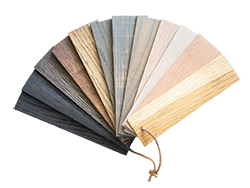


Walk through any recently renovated home in Melbourne and there’s a good chance you’re standing on engineered oak. Wide, pale, matte boards have become the default look for modern Australian interiors, and oak is the timber behind almost all of them.
What’s less obvious is why. Oak isn’t native here, it’s softer than the hardwoods that are, and it costs more to get onto a truck in Melbourne than something grown a few hours up the highway.
So is engineered oak actually a good choice for an Australian home, or is it just what everyone’s buying? Here’s an honest look.
What Engineered Oak Actually Is
An engineered oak board has a genuine oak wear layer — real timber, usually between 2mm and 6mm thick — bonded to a core of cross-layered plywood or, in cheaper products, HDF.
The surface you walk on is oak. What’s underneath is engineered for stability, with the layers running in alternating directions so the board resists the expansion and contraction that solid timber goes through.
Two species dominate the market:
European oak is the more common here. Warmer in tone, with a softer golden-brown colour and a pronounced, open grain. It takes stains and reactive finishes particularly well, which is why almost every smoked, limed and whitewashed floor you’ve seen is European oak.
American white oak is slightly harder and cooler in tone, with a straighter, tighter grain. Less dramatic, more uniform.
Both are imported. There is no meaningful Australian oak production, and “Tasmanian oak” — which you’ll see sold locally — is not oak at all. It’s a marketing name for a group of eucalypts, and it behaves very differently.

Why Oak Has Taken Over
Three reasons, and they’re all about appearance rather than performance.
It’s pale and neutral. Oak sits in a light golden-beige range that works with almost any interior. It doesn’t push a colour scheme in any direction, which makes it a safe choice for anyone who’ll restyle a room over time.
It takes finishes better than anything else. Oak’s open grain and tannin content mean it responds to reactive stains, lime washes and smoking in ways most timbers can’t. The range of looks available in oak is simply wider — from bleached Scandinavian pale through to near-black smoked.
It comes in wide boards. The 190mm to 260mm wide-plank look that defines contemporary interiors is far easier to achieve in engineered oak than in solid Australian hardwood, where wide boards are more prone to cupping.
The Honest Downside: Oak Is Soft
This is the part that gets glossed over in showrooms, and it’s the single most important thing to understand before you commit.
On the Janka hardness scale, European oak sits at roughly 4.5 kN and American white oak around 6 kN. Australian hardwoods are in a different league — blackbutt is about 9 kN and spotted gum around 11 kN.
In plain terms, oak dents about twice as easily as blackbutt. A dropped pan, a dragged chair leg, a stiletto heel, a dog’s claws — oak records all of it more readily.
This doesn’t make oak a bad floor. Millions of European homes have had oak underfoot for centuries. But it does mean expectations need adjusting. If you want a floor that stays pristine in a household with large dogs and young children, oak will disappoint you and an Australian hardwood won’t.
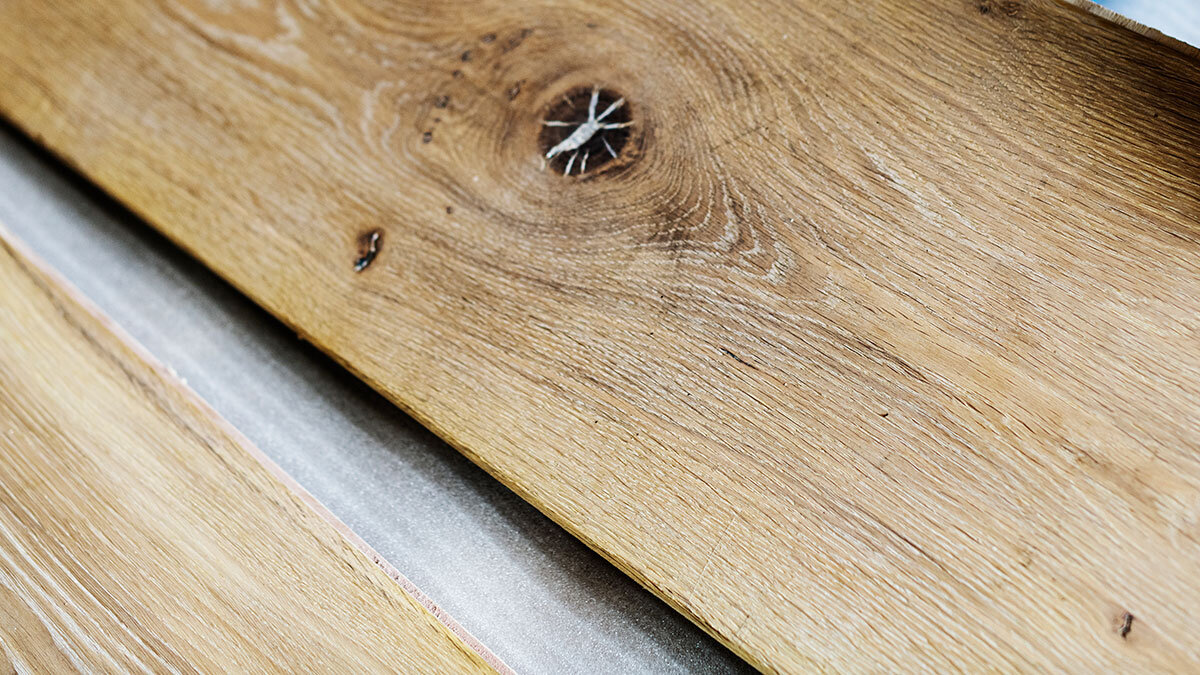
There’s a counterpoint worth knowing. Many oak floors are sold in rustic or character grades with visible knots, colour variation and natural markings — and those grades hide wear far better than a clean prime-grade floor. Choosing a character grade is a legitimate strategy for a busy house.
How It Handles the Melbourne Climate
This is where the engineered construction earns its place.
Melbourne moves between genuinely humid summer stretches and dry, heated winters. Solid timber responds by expanding and contracting through a full cycle each year, which shows up as seasonal gapping.
Engineered oak’s cross-layered core resists that movement substantially. Gapping is reduced, wide boards stay flatter, and the floor copes better with the swing between a closed-up house running heating in July and an open one in February.
It also opens up installations that solid timber can’t handle — over concrete slabs, in apartments, and with underfloor heating. Given how many newer Melbourne homes and apartments are slab-on-ground, this alone accounts for a large share of engineered oak’s popularity.
One thing to note: oak is pale enough that UV change is less dramatic than with blackbutt, which ambers noticeably. Oak still shifts — it warms and deepens slightly — but the change is gentler. Rugs left in one place for years will still leave an outline.
The Numbers That Actually Matter When Buying
Two engineered oak boards can look identical in a showroom and be completely different products. These are the specifications to ask about.
Wear layer thickness. The single most important figure. A 2mm wear layer might tolerate one light sand in its lifetime. A 4mm to 6mm layer can usually handle three or four. This determines whether the floor lasts fifteen years or fifty, and it’s rarely displayed prominently. Ask for it in millimetres.
Core material. Multi-layer plywood is more stable and holds fixings better than HDF. HDF cores appear in cheaper products and are considerably more vulnerable to moisture — if water reaches the core, it swells and doesn’t recover.
Total board thickness. Around 14mm to 21mm is typical for a quality product. Very thin boards tend to feel hollow underfoot and offer little refinishing potential.
Finish type. Lacquered (polyurethane) surfaces are more durable and lower maintenance, but damage is harder to spot-repair. Oiled and hardwax-oiled finishes look more natural and can be repaired in patches, but need re-oiling periodically. Neither is better — they’re different maintenance commitments, and it’s worth knowing which one you’re signing up for.
Formaldehyde emissions. Look for E0 or E1 rating. This matters for indoor air quality and is worth confirming on imported products.
Engineered Oak vs Engineered Australian Hardwood
If you’re weighing oak against an engineered blackbutt or spotted gum, the trade-off is fairly clean.
Oak gives you a wider range of colours and finishes, easier access to wide boards, a paler and more neutral base, and the look that currently dominates interior design.
Australian hardwood gives you significantly better dent resistance, local sourcing with a shorter supply chain, and species that suit period homes and existing timber elsewhere in the house.
The practical question is usually which matters more to you: the look, or the durability. Both are valid answers, and neither species is objectively better.
Where Engineered Oak Works Well
- Apartments and newer homes built on concrete slabs
- Rooms with underfloor heating
- Contemporary interiors where a pale, wide-board floor is the goal
- Homes where the floor needs to work with changing decor over time
- Large open-plan spaces, where wide boards read well
Where it’s less suitable: households with large dogs, entryways taking heavy outdoor traffic, homes where a floor is expected to look untouched for twenty years, and period restorations where an Australian species would be historically appropriate.
Watch Out for “Oak” That Isn’t
The word oak appears on a great deal of flooring that contains none.
Laminate and hybrid products are routinely sold with decor names like “natural oak” or “coastal oak”. These are printed photographic layers designed to imitate oak grain. They may be perfectly good products, but they are not timber.
The check is simple. Ask whether the wear layer is real timber, and if so, how thick it is in millimetres. Anyone selling genuine engineered oak will answer immediately. If the answer is vague, or the conversation shifts to the total board thickness instead, you’re likely looking at a printed product.
So Is It Right for Your Home?
Engineered oak is an excellent floor for the right house. It’s stable, it suits slab construction, it comes in more finishes than anything else on the market, and it delivers a look that hasn’t dated in fifteen years and probably won’t soon.
It’s the wrong floor if maximum hardness is your priority. That’s a genuine limitation, not a detail — and anyone who tells you oak is as tough as Australian hardwood is either mistaken or selling.
The decision usually comes down to how you actually live in the space, not what looks best in a showroom. If you’d like to talk it through with Melbourne timber flooring specialists, our team is happy to help you weigh engineered oak against the alternatives for your particular home.
 Hybrid Flooring
 Timber Flooring
 Laminate Flooring
 Cork Flooring
 Carpet Tiles