


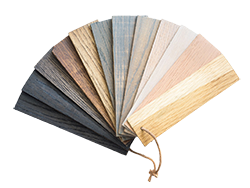


If you’ve started looking at Australian hardwood floors, two names come up more than any others: spotted gum and blackbutt. Both are native eucalypts, both are hard-wearing, and both have been used in Australian homes for generations.
They also look almost nothing alike. Choosing between them is less about which timber is better and more about which one suits the room you’re putting it in.
Here’s how they actually compare.
The Quick Version
Spotted gum is dramatic. Colours range from pale grey-brown through to deep chocolate and red-brown, often within the same floor, and the grain frequently has a wavy, interlocked figure that catches the light. It’s the harder of the two.
Blackbutt is calm. Pale golden through to light honey-brown, with a straighter, more even grain and far less colour variation board to board. It reads as a light, contemporary floor.
If you want a floor that makes a statement, spotted gum. If you want a floor that recedes and lets the room do the talking, blackbutt.
Appearance in Detail
Spotted Gum
The defining feature is variation. A spotted gum floor can hold pale biscuit boards next to deep reddish-brown ones, with everything in between. Some people love that; others find it busy.
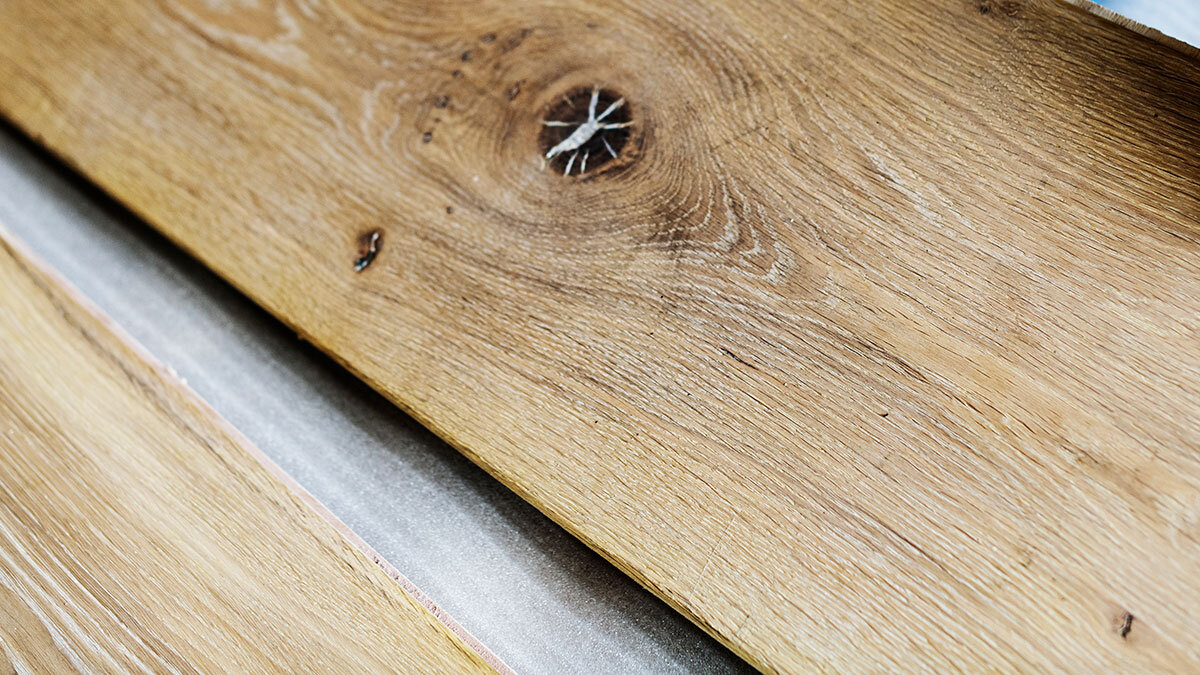
The grain often shows a wavy or fiddleback figure — a rippling effect across the board that shifts as you move around the room. On a wide-board floor in good light, it’s genuinely striking.
The practical consequence of all that variation is that spotted gum needs to be laid thoughtfully. Boards should be shuffled from multiple packs during installation so the colours distribute evenly rather than clumping into a dark patch in one corner. A good installer does this automatically; a rushed one doesn’t.
Blackbutt
Blackbutt is much more uniform. The colour sits in a narrow band of pale straw to light golden brown, and the grain is generally straight with occasional gum veins.
That consistency is why it has become the default choice for modern Australian interiors. It pairs easily with white walls, works in smaller rooms where a dark floor would close the space in, and doesn’t compete with furniture or artwork.
One point of confusion worth clearing up: “coastal blackbutt” is a colour name used by hybrid, laminate and engineered flooring manufacturers. It’s a decor pattern designed to imitate blackbutt, not the timber itself. If you’re buying solid or engineered hardwood, ask specifically whether you’re getting genuine blackbutt or a look-alike finish.
Hardness and Durability
Both are hard by international standards. Compared to European oak or American walnut, either one is significantly tougher.
Between the two, spotted gum is harder. On the Janka scale it sits at roughly 11 kN, against about 9 kN for blackbutt. In practice that means spotted gum resists denting from dropped objects and furniture a little better.
Don’t overweight this. The difference is real but modest, and both sit well above the threshold where a timber is suitable for a busy family home. Far more damage comes from grit tracked in on shoes than from hardness ratings — a well-maintained blackbutt floor will outlast a neglected spotted gum one.
Both are rated durability class 2 above ground, and both carry natural resistance to decay. Both are also among the small group of Australian timbers approved for use in bushfire-prone areas up to BAL-29, which matters if you’re building in a designated zone.
How They Behave Underfoot and Over Time
All timber moves with humidity, and both of these are no exception. Melbourne’s swing between humid summers and dry, heated winters puts any hardwood floor through a full expansion and contraction cycle each year.
Spotted gum’s interlocked grain makes it slightly more prone to movement and to tearing during sanding if the work is rushed. It’s not difficult to work with, but it rewards an experienced hand — particularly at the sanding stage, where going against the interlocked grain can leave a fuzzy surface that shows up once the coating goes on.
Blackbutt’s straighter grain sands more predictably. It does have a tendency to show surface checking — fine hairline splits — if it dries out too aggressively, which is one reason acclimatisation before installation matters.
How the Colour Ages
This is the factor people most often overlook, and it changes the floor more than anything else over the first few years.
Blackbutt ambers noticeably. The pale straw tone warms into a deeper honey-gold with UV exposure. A floor that looked cool and pale on installation day will read distinctly warmer in two years. If you’ve chosen it specifically for a very light, Scandinavian look, a whitewash or a UV-blocking finish is worth discussing.
Spotted gum deepens and richens. The reds and browns intensify rather than shifting hue. Most people find it improves with age.
Both will show the difference where rugs and furniture have blocked sunlight. Moving a rug after three years reveals a lighter rectangle underneath. Rotating rugs occasionally helps this even out.

Which Rooms Suit Which
Choose spotted gum if:
- You have a large, open, well-lit space that can carry a busy floor
- You want warmth and depth rather than a neutral background
- The house has a lot of natural material — stone, brick, exposed timber
- You want maximum dent resistance in a high-traffic household
- You’re matching to existing decking or joinery in the same timber
Choose blackbutt if:
- The space is smaller or gets limited natural light
- You want a light, contemporary, uncluttered look
- You have strong furniture, art or joinery that shouldn’t compete with the floor
- You prefer a consistent floor with minimal board-to-board variation
- You’re likely to change your interior styling over time and want a neutral base
Solid or Engineered?
Both species are available as solid boards and as engineered boards with a genuine hardwood wear layer.
Solid gives you the longest life and the most refinishing cycles. Engineered is more stable through humidity swings and can go over a concrete slab, which is why it dominates in newer builds and apartments.
If you’re going engineered, the number to ask about is the wear layer thickness. That single figure determines how many times the floor can be sanded across its life, and it varies enormously between products that look identical in a showroom.
Finishing Considerations
Both species take standard coatings well, but the finish choice affects the outcome differently for each.
On spotted gum, a gloss or satin polyurethane amplifies the grain figure and the colour depth. A matte finish tones the drama down if the variation feels like too much.
On blackbutt, water-based coatings keep the pale tone closer to the raw timber. Solvent-based polyurethane adds a warm amber cast immediately, which some people like and some don’t — worth seeing a sample of both before deciding, because it’s not a small difference on a pale timber.
Whichever you choose, ask for sample boards finished in the actual coating you’ll be using, and look at them in the room itself across a full day. Showroom lighting misrepresents both of these timbers.
Maintenance
Day to day, both are treated the same way: sweep or vacuum regularly to keep grit off the surface, use a barely damp mop rather than a wet one, keep felt pads under furniture, and put mats at entry points.
Neither is more demanding than the other. The general principles for caring for timber floors apply equally to both, and doing the basics consistently matters far more than the species you chose.
So Which One?
There’s no wrong answer here. Both are excellent Australian hardwoods that will last decades with reasonable care.
The honest summary: spotted gum is the more characterful floor and the harder one, but it’s demanding of the space it goes into. Blackbutt is the safer, more versatile choice, and it’s the one that suits more Melbourne homes more of the time.
If you’re deciding between them, get physical samples and live with them in the actual room for a few days. Photographs — including the ones on this page — flatten both timbers considerably.
If you’d like help working out which suits your space, subfloor and light, get in touch with our team and we’ll talk it through.
 Hybrid Flooring
 Timber Flooring
 Laminate Flooring
 Cork Flooring
 Carpet Tiles